Are Lab-Grown Diamonds Sustainable?
Environmental Realities, Carbon Facts & Mined Comparisons
Lab-grown diamonds have reshaped fine jewelry by replacing massive open-pit excavation with clean plasma physics. Yet claiming they are automatically “100% green” ignores the reality of energy consumption. Here is what independent science, factory lifecycle audits, and the FTC say about genuine diamond sustainability.
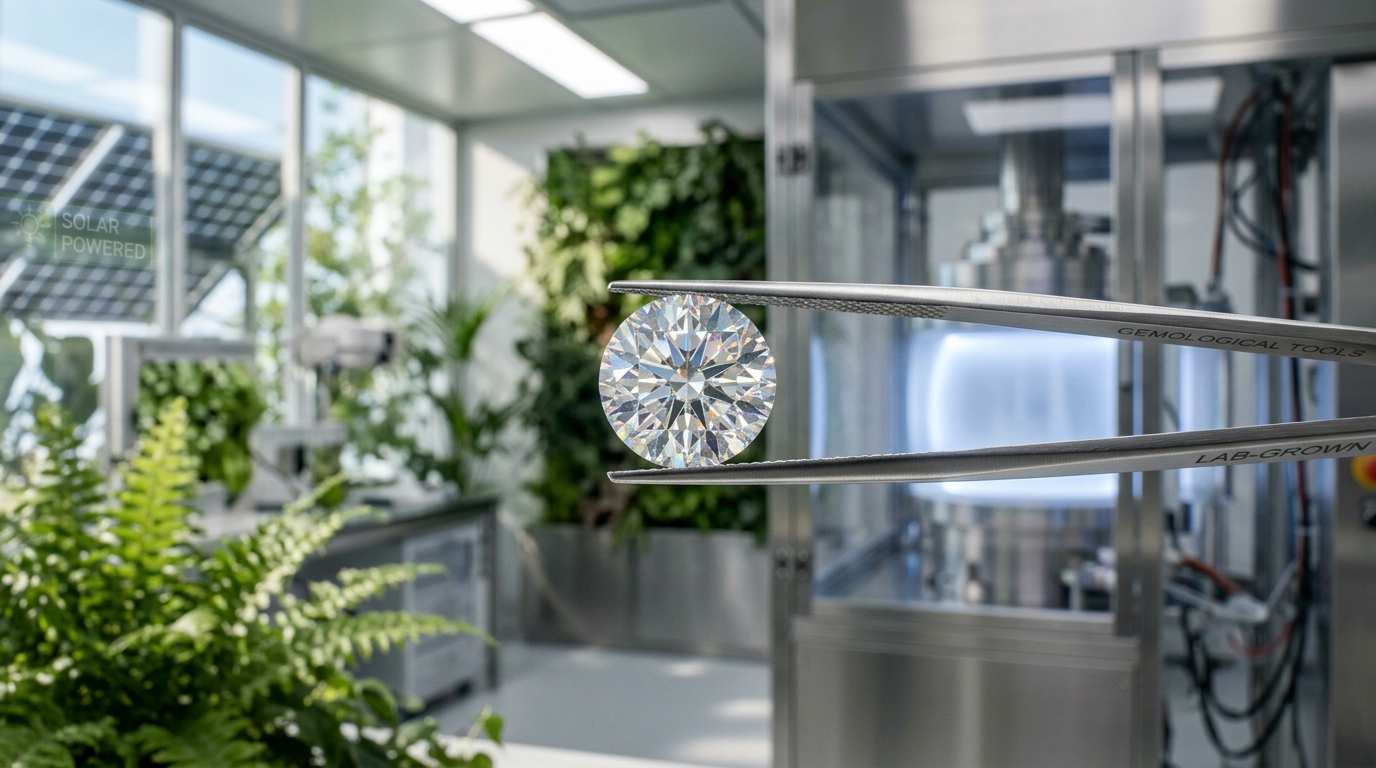
Executive Summary: Key Findings at a Glance
If you are researching ethical jewelry or considering a lab-grown engagement ring, these are the core engineering facts established by independent lifecycle assessments (LCAs):
Diamonds have commanded human admiration for millennia as symbols of beauty, enduring strength, and eternal commitment. Over the last decade, however, the modern consumer’s gaze has broadened beyond the traditional 4Cs (Carat, Cut, Color, Clarity) to embrace a vital fifth dimension: proven provenance and environmental responsibility.
Lab-grown diamonds have arrived at the forefront of this conscious consumer movement. Formed via advanced laboratory plasma synthesis rather than geological volcanic eruptions hundreds of kilometers below the Earth’s crust, these diamonds are physically, optically, and chemically identical to mined diamonds. They register the exact same 10 on the Mohs hardness scale, exhibit the identical 2.417 refractive index, and carry genuine IGI and GIA diamond grading certificates.
However, the rapid commercial ascent of lab diamonds has spawned a wave of sweeping marketing claims. Marketing slogans declaring lab-grown diamonds as “100% eco-friendly,” “zero-emission,” or “completely guilt-free” dominate jewelry advertisements.
The Manufacturer's Reality Check:
No manufactured luxury product has zero environmental impact. Diamond growth chambers require high temperatures, precise vacuum atmospheres, and intense electromagnetic energy. True sustainability is not a binary label—it is a quantitative lifecycle equation governed by electricity sources, water recirculation, and supply chain accountability.
In this comprehensive guide, we unpack the peer-reviewed environmental science of lab-grown diamonds, compare cradle-to-gate data against mined diamond extraction, examine the strict guidance of the US Federal Trade Commission (FTC), and equip you with a practical checklist to verify whether a diamond is truly responsibly made.
1. What Are Lab-Grown Diamonds? CVD vs. HPHT Energy Profiles
Lab-grown diamonds are authentic, crystallized elemental carbon ($C$). They are not simulants like cubic zirconia ($ZrO_2$) or moissanite ($SiC$), which possess completely different crystal lattices, thermal conductivities, and light refraction.
Today, commercial gem-quality diamond synthesis relies on two distinct thermodynamic pathways. Understanding these processes is critical because their electrical consumption and manufacturing footprints differ significantly:
CVD Method
Plasma SynthesisChemical Vapor Deposition
A thin sliver of diamond seed crystal is placed inside a specialized vacuum chamber. Hydrocarbon gases (predominantly high-purity methane $CH_4$ and hydrogen $H_2$) are ionized into a luminous plasma ball using microwave generators at 800°C to 1,000°C.
- Pressure: Ultra-low (fraction of an atmosphere, near-vacuum).
- Energy Profile: Continuous microwave radiation for 3 to 4 weeks.
- Purity: Produces rare Type IIa diamonds (nitrogen-free), the purest gemological crystal classification.
HPHT Method
Hydraulic PressHigh Pressure High Temperature
HPHT recreates the cataclysmic geology of the upper mantle. Purified graphite is enclosed with molten metal flux catalysts (iron, nickel, or cobalt) inside massive hydraulic multi-anvil or BARS presses.
- Pressure: 55,000 to 60,000 atmospheres (800,000+ psi).
- Temperature: 1,400°C to 1,600°C.
- Energy Profile: High mechanical power needed to maintain hydraulic ram pressure over multi-day growth runs.
Because both technologies require continuous operational heat, cooling circulation, and electromagnetic or hydraulic drive power, electricity represents the overwhelming bulk of a lab diamond’s cradle-to-gate environmental burden.
2. The 5 Pillars of Diamond Sustainability: Lab vs. Earth
To objectively evaluate environmental performance, sustainability scientists examine five fundamental ecological dimensions across a product’s lifecycle:
Pillar 1: Land Displacement & Habitat Disruption
This is the most undeniable ecological advantage of laboratory diamond synthesis. Geological diamond extraction requires open-pit or deep-shaft excavation of Kimberlite pipes. According to academic research published in Nature Communications and independent geological audits:
By eliminating open-pit digging, lab diamonds avoid deforestation, topsoil destruction, wildlife corridor fragmentation, and the perpetual generation of hazardous mining overburden.
Pillar 2: Energy Consumption & Kilowatt-Hours
While lab diamonds spare the earth's crust, they consume significant electrical energy. A microwave plasma CVD reactor operates at temperatures hot enough to break methane molecules ($~1,000^\circ\text{C}$ gas temperature, with plasma electron temperatures exceeding $10,000\text{ K}$).
Lifecycle assessments indicate that synthesizing 1 rough carat of diamond requires roughly 250 to 750 kWh of electricity. To put that into perspective:
- An average American household consumes approximately 30 kWh per day.
- Growing a 2-carat rough crystal can consume equivalent electricity to running a typical home for 1 to 2 weeks.
- Conversely, mined diamond operations burn massive volumes of diesel fuel for 400-tonne haul trucks, hydraulic excavators, and mechanical crushing mills.
Pillar 3: Carbon Footprint (kg CO2e per Carat)
Carbon emissions vary dramatically based on location and electricity supply:
| Production Method & Power Source | Estimated Emissions (kg CO2e / polished ct) | Relative Impact |
|---|---|---|
| Traditional Mined Diamond (Cradle-to-gate: open-pit / underground diesel extraction + crushing) | ~160 – 500+ kg CO2e | High mineral & heavy machinery footprint |
| Lab-Grown Diamond (Fossil-Fuel / Thermal Coal Grid Mix) | ~120 – 250 kg CO2e | Grid-dependent electrical footprint |
| Lab-Grown Diamond (Dedicated Solar / Hydro Renewable Power) | ~15 – 35 kg CO2e | Significantly reduced atmospheric impact (up to 85–90% reduction) |
*Comparative ranges compiled from peer-reviewed literature including Nature: Humanities & Social Sciences Communications (2024), Trucost / S&P Global, Frost & Sullivan lifecycle benchmarks, and facility-level solar PPA audits.
Pillar 4: Water Use & Chemical Safety
Industrial diamond mines consume hundreds of liters of water per carat for ore separation, dust suppression, and Kimberlite slurry washing. In fragile arid ecosystems (such as Botswana or South Africa) or sub-arctic zones (Canada's Northwest Territories), water extraction and tailings pond management pose ongoing contamination risks.
In contrast, modern lab-grown diamond synthesis facilities employ closed-circuit chiller loops. Water is recirculated through heat exchangers to cool magnetrons and chamber walls without being consumed or contaminated. Net makeup water consumption is minimal (<20 liters per carat, primarily for routine lapidary laser cooling and ultrasonic cleaning).
Pillar 5: Lapidary Yield & Rough Carbon Efficiency
An often-overlooked environmental metric is material yield during cutting and polishing:
- Mined Rough: Natural diamonds form in irregular, distorted octahedral lumps filled with internal inclusions. Master cutters typically lose 65% to 75% of the raw stone as grinding dust during facet planning. Yield is only ~25%–35%.
- CVD Lab Rough: CVD crystals grow outward in flat, uniform rectangular tabular plates. Because the shape is predictable and Type IIa clarity is exceptionally clean, cutting yield jumps to 45% to 55%. Less raw carbon is wasted, requiring less diamond powder and grinding energy per carat cut.
3. Environmental Comparison Matrix: Lab-Grown vs. Mined
This matrix compiles empirical data across peer-reviewed studies, corporate sustainability disclosures, and mineral resource assessments.
| Impact Metric | Lab-Grown Diamonds | Mined Earth Diamonds |
|---|---|---|
| Earth & Ore Displaced | 0 tonnes (Cleanroom synthesis) | ~200–250 tonnes per carat |
| Electricity Consumption | 250 – 750 kWh / carat (High energy input) | Heavy diesel + crushing power (30–120 kWh + gallons of fuel) |
| Carbon Emissions (CO2e) | 10–25 kg (Solar) | 120–160 kg (Grid) | 500 – 800+ kg CO2e per carat |
| Water Consumption | < 20 liters (Recirculating chillers) | ~450 – 500 liters per carat |
| Deforestation & Habitats | Virtually Zero (Built within existing industrial parks) | Extensive pit clearance, roads, and tailings ponds |
| Traceability & Origin | 100% Traceable to exact reactor & lot number | Mixed parcels through aggregate sorting hubs |
| Conflict / Blood Diamond Risk | 0% (Incapable of financing militia conflicts) | Kimberley Process coverage (residual artisanal risks) |
| Acid Mine Drainage | None (No sulfur-bearing tailings) | Documented risks in heavy mineral processing |
4. Why Renewable Energy Is the True Test of Diamond Sustainability
The diamond industry is undergoing a geographic and technological transformation. Surat and Ahmedabad in Gujarat, India—long celebrated as the lapidary capital that cuts and polishes over 90% of the world's diamonds—have evolved into premier global hubs for advanced Microwave Plasma CVD diamond synthesis.
Gujarat enjoys one of the highest solar radiation profiles in Asia, with more than 300 clear sunny days per year. Forward-thinking CVD diamond manufacturers have invested directly into captive rooftop solar arrays and open-access solar power parks to power their synthesis reactors.
The Scope 1, 2, and 3 Emissions Equation:
When diamond growers undergo rigorous environmental audits (such as ISO 14064 or SCS-007), their emissions are separated into three tiers:
Methane ($CH_4$) gas consumed in the chamber. Nearly all carbon binds directly into the diamond crystal lattice, keeping direct emissions minimal.
The power running the plasma microwave generators. When switched to solar or wind, up to 95% of total product carbon is eliminated.
Manufacturing of equipment, transport of seeds, and logistics to retail markets. Represents less than 5% of total footprint.
This reality is why smart consumers no longer settle for the generic label “lab-grown.” They specifically inquire about the energy mix powering the synthesis facility.
5. Beyond the Environment: Human Rights & Supply Chain Ethics
Sustainability cannot be measured solely in kilowatt-hours and carbon emissions. True ethical luxury encompasses human welfare, worker safety, fair compensation, and regional stability.
For decades, the mined diamond supply chain struggled with the harrowing legacy of conflict diamonds—gemstones mined in war zones and sold to finance armed insurgencies, forced labor, and despotic regimes. Although the Kimberley Process Certification Scheme (KPCS) instituted crucial export paperwork, industry watchdogs like Global Witness note that Kimberley primarily regulates rough diamond trade between rebel factions, often overlooking human rights abuses within state-controlled mining operations or unregulated artisanal alluvial pits.
Lab Diamonds: 100% Conflict-Free
By definition, a diamond crystallized inside a high-vacuum microwave reactor in Surat or Silicon Valley cannot fund civil conflicts or warlord militias. It enters the commerce pipeline with a clear, serialized audit trail from seed crystal to laser inscription.
Modern High-Tech Workplace
CVD synthesis operates in climate-controlled, dust-free cleanrooms staffed by university-trained plasma engineers, vacuum physicists, and certified lapidary artisans. Safety protocols are rigorous, eliminating occupational hazards like shaft collapses and dust silicosis.
6. Understanding the FTC Green Guides: How to Spot Greenwashing
In response to exaggerated marketing claims across the jewelry sector, the United States Federal Trade Commission (FTC) issued landmark regulatory warning letters to major lab-grown diamond marketers. Under 16 CFR Part 260 (Guides for the Use of Environmental Marketing Claims), the FTC established unequivocal boundaries:
What the FTC Forbids in Diamond Advertising:
- Unqualified General Environmental Benefit Claims: Sellers cannot use broad phrases such as “eco-friendly,” “sustainable,” “green,” or “environmentally superior” without immediate, verifiable context.
- Implied Zero-Impact: Implying that a lab-grown diamond has “no carbon footprint” or “causes no pollution” violates federal deceptive advertising guidelines unless backed by third-party lifecycle assessments.
- Carbon-Neutral Claims: Brands cannot proclaim carbon neutrality without substantiating that all greenhouse gas emissions were calculated, independently audited, and properly eliminated or offset with certified credits.
What Does Legitimate Compliance Look Like?
Honest manufacturers qualify their assertions with precise facts. For example:
“Our CVD lab-grown diamonds eliminate open-pit mining land displacement and are grown in synthesis facilities operating on 100% solar energy contracts.”
This statement is specific, substantiated, and fully compliant with international consumer protection standards.
7. The 7-Question Buyer’s Checklist: How to Choose a Truly Sustainable Diamond
When shopping for an engagement ring, loose certified diamond, or bespoke jewelry piece, do not settle for marketing buzzwords. Present your jeweler or supplier with this 7-point verification checklist:
What primary electricity source powers the synthesis reactor?
Ask whether the growing facility uses grid electricity, dedicated rooftop solar, wind power purchase agreements (PPAs), or renewable energy certificates (RECs).
Can the seller provide third-party lifecycle or emissions data?
Reputable growers partner with independent environmental auditors (such as SCS Global Services, ISO 14064 certifiers, or verified carbon registries) to measure cradle-to-gate carbon intensity.
Does the facility utilize closed-loop water recirculation?
Ensure the factory operates closed-circuit chilling loops that recycle cooling water rather than drawing fresh municipal supplies for single-use heat disposal.
Is the diamond 100% traceable to its growth laboratory?
Ask for the rough growth batch or facility disclosure. Transparent growers maintain direct custody from seed loading through laser sawing and final faceting.
Is the diamond independently certified by IGI or GIA?
Ensure the grading report confirms the diamond is Type IIa, discloses the growth method (CVD or HPHT), and verifies whether post-growth treatments were applied.
Are the setting precious metals recycled or Fairmined?
Diamond sustainability is incomplete without considering the metal ring mount. Pair your stone with 100% recycled 14k/18k gold or 950 platinum to reduce mining impacts across the entire jewelry piece.
Are sustainability claims specific and substantiated?
Beware of jewelers using vague phrases like “100% eco-friendly.” Prefer sellers who explain their exact processes with modesty, technical nuance, and transparency.
8. The Future of Sustainable Diamonds: Technological Horizons
The next frontier in sustainable diamond synthesis is not merely incremental efficiency—it is systematic decarbonization. Several emerging industrial breakthroughs are redefining the field:
Next-Gen Plasma Generators
High-frequency 915 MHz multi-wafer CVD reactors expand chamber volume, growing 4x more carats per kilowatt-hour than legacy 2.45 GHz units.
Green Hydrogen Feedstock
Transitioning CVD carrier gas from conventional natural gas cracking to green hydrogen produced via solar water electrolysis.
AI-Optimized Thermal Control
Machine-learning temperature feedback algorithms prevent plasma micro-arcing and reduce chamber power surges by up to 18%.
9. Frequently Asked Questions (FAQ)
10. Conclusion: Making an Empowered, Evidence-Based Decision
Lab-grown diamonds have fundamentally altered the landscape of luxury. By eliminating open-pit excavation, the destruction of pristine ecosystems, and centuries of mining-related land scarring, they offer a vastly superior physical footprint compared to traditional extraction.
However, sustainability is not an automatic birthright of the laboratory label. Because diamond synthesis requires high temperatures and microwave plasma physics, the clean energy transition is the definitive differentiator.
As a buyer, your greatest asset is curiosity and transparency. By prioritizing suppliers who openly discuss their electricity sources, verify emissions through third-party audits, and provide Type IIa certified diamonds, you can celebrate life's most meaningful moments with an exquisite diamond that truly reflects your values.
Looking for Certified, Responsibly Grown Diamonds?
Explore our factory-direct collection of IGI & GIA certified CVD diamonds synthesized in Surat, India. From 1 to 5+ carats in all classic and fancy cuts, backed by complete supply chain traceability.
References & Independent Regulatory Sources:
- Nature: Humanities & Social Sciences Communications: “The environmental impacts and sustainable pathways of the global diamond industry” (2024). Empirical comparative lifecycle modeling of global diamond production.
- Federal Trade Commission (FTC): “Environmental Claims and the Green Guides (16 CFR Part 260)”. Regulatory framework governing environmental marketing and advertising substantiation.
- FTC Bureau of Consumer Protection: “Warning Letters to Jewelry Marketers on Lab-Grown and Recycled Claims” (2018–2023). Clarifying requirements for qualifying environmental and origin claims.
- S&P Global Trucost / Diamond Producers Association: “The Socioeconomic and Environmental Impact of Large-Scale Diamond Mining” (Comparative baseline data on water, emissions, and community development).
- SCS Global Services: “SCS-007 Sustainability Rated Diamond Standard”. Comprehensive third-party standard establishing origin traceability, climate neutrality, and sustainability stewardship.
Table of Contents
New Origin Research Desk
Gemological & Sustainable Physics TeamAuthored in collaboration with our CVD growth reactor technicians and master lapidary cutters based in Surat & Ahmedabad, Gujarat, India.
Explore Certified Diamonds
Direct Diamond Consultation
Speak directly with our gemologists in Surat regarding certified ethical inventory and live parcel videos.
WhatsApp Trade Desk